summarize the details of your system's users (also known as actors) and their interactions with the system.
use a set of specialized symbols and connectors.
can help your team discuss and represent:
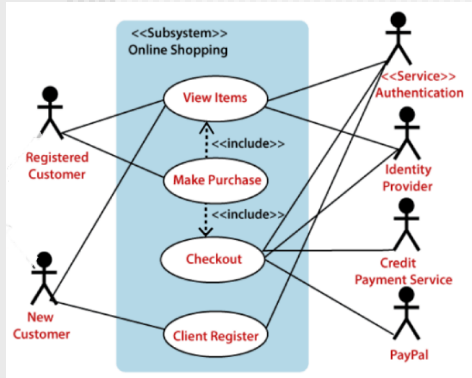
Scenarios in which your system or application interacts with people, organizations, or external systems.
Goals that your system or application helps those entities (known as actors) achieve.
The scope of your system
Use case diagrams are ideal for:
•Representing the goals of system-user interactions
•Defining and organizing functional requirements in a system
•Specifying the context and requirements of a system
•Modeling the basic flow of events in a use case
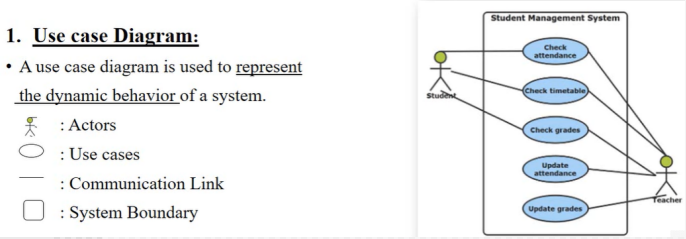
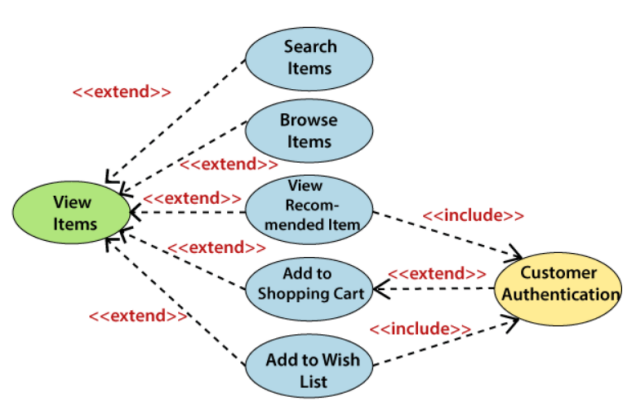
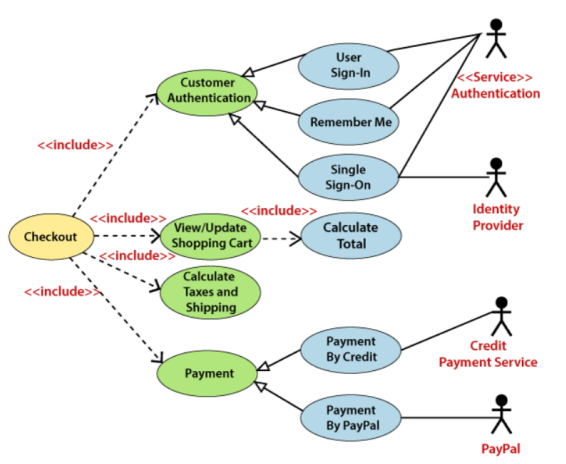
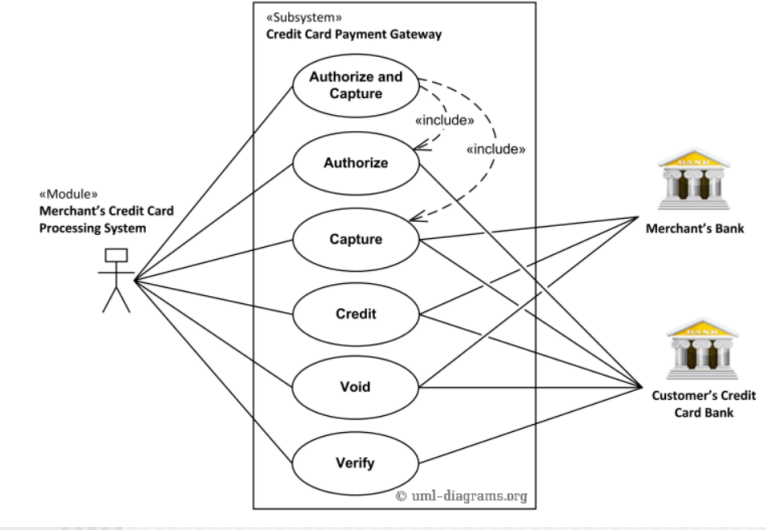
Use cases: Horizontally shaped ovals that represent the different uses that a user might have.
Actors: Stick figures that represent the people actually employing the use cases.
Associations: A line between actors and use cases. In complex diagrams, it is important to know which actors are associated with which use cases.
System boundary boxes: A box that sets a system scope to use cases. All use cases outside the box would be considered outside the scope of that system.
Rules while drawing:
A pertinent and meaningful name should be assigned to the actor or a use case of a system.
The communication of an actor with a use case must be defined in an understandable way.
Specified notations to be used as and when required.
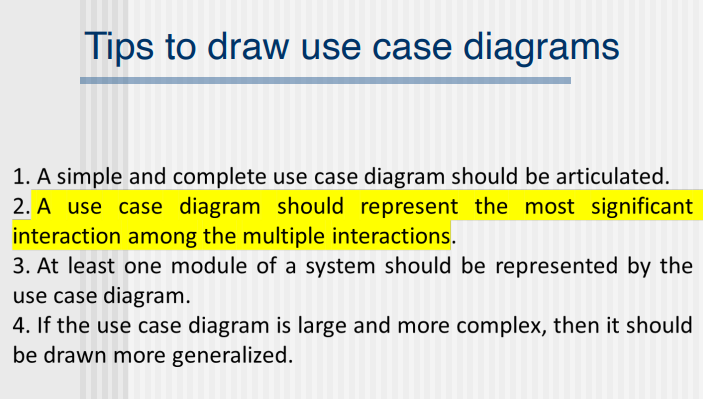
The most significant interactions should be represented among the multiple no of interactions between the use case and actors.